
A sealed drink container does more than hold a beverage. It creates a barrier between the product and the outside environment while also giving consumers a visible indication of whether the package has been opened. This is especially important for products that may remain on store shelves, move through warehouses, and travel long distances before reaching the customer. 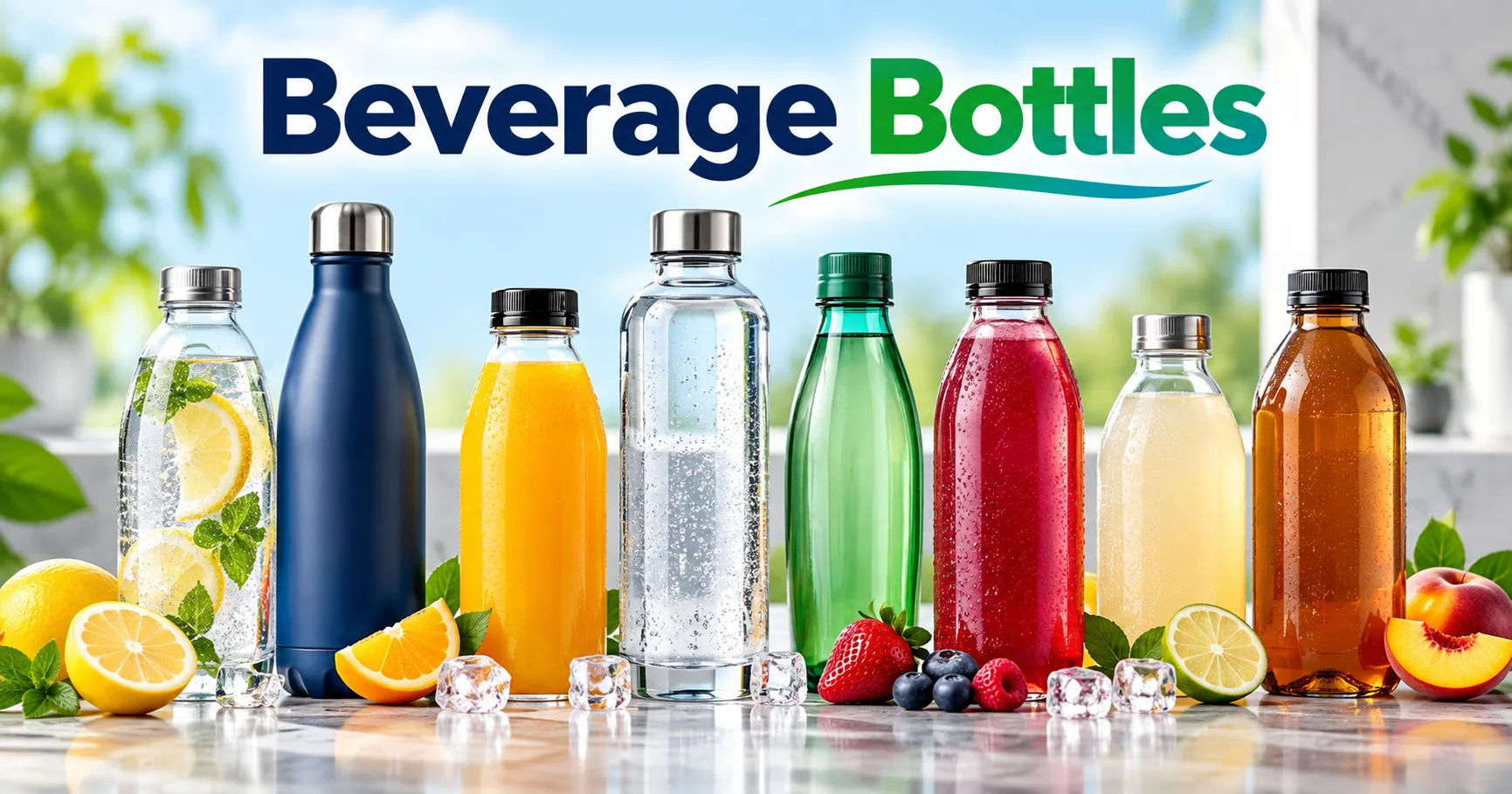 Modern beverage bottles are designed with several packaging features that work together. The bottle, neck finish, cap, liner, tamper band, and sealing process all have a specific role.
When these components are correctly matched, the package can remain closed during transportation while still allowing the customer to open it without excessive effort.
Tamper evidence is not exactly the same thing as making a package impossible to open. Instead, the purpose is to make unauthorized opening easier to notice. A properly designed closure can show a broken ring, separated seal, altered cap, or other visible sign after the bottle has been opened.
The sealing process therefore has to balance security, product protection, manufacturing speed, and convenience. Understanding how it works explains why bottle caps often have features that may seem simple but are actually carefully engineered.
What Does Tamper Evident Mean?
A tamper-evident package provides a visible or otherwise detectable indication when its original closure has been disturbed.
The idea is straightforward. When a beverage leaves the production facility, the package should have a recognizable sealed condition. If someone opens it before the intended consumer does, some part of the closure should change.
This does not necessarily prevent someone from opening a bottle. Instead, it helps reveal that the original seal has been broken.
For bottled drinks, the most familiar example is the plastic tamper-evident ring attached to the bottom of a screw cap. Before opening, the ring is connected to the cap. When the customer twists the cap, specially designed bridges break and the cap separates from the ring.
The broken connection provides a visual and sometimes audible indication that beverage bottles have been opened.
Why Tamper Evidence Is Used on Bottles
Beverage packaging can pass through many hands before it reaches a consumer. Bottles may be filled at a production plant, packed into cases, transported to distribution centers, delivered to retailers, placed on shelves, and eventually purchased.
A reliable closure helps protect the contents throughout this process.
Tamper evidence also supports consumer confidence. A customer can inspect the closure before opening the bottle. If the closure looks damaged or the tamper ring is already separated, the customer has a reason to avoid using the product.
This is particularly useful for bottled water, soft drinks, juices, flavored beverages, sports drinks, and other ready-to-drink products.
The Main Components of a Tamper-Evident Bottle Closure
A tamper-evident bottle is not simply a bottle with a cap screwed onto it. Several components can work together to create the finished package.
The Bottle Neck Finish
The neck finish is the threaded or shaped portion at the top of the bottle that interacts with the closure.
Its dimensions are important because the cap must fit correctly. Thread geometry, neck diameter, finish height, and sealing surfaces all influence how the closure performs.
A poorly matched neck and cap can result in leakage, weak sealing, excessive opening force, or inconsistent tamper evidence.
The Closure
The closure is usually made from plastic and is designed to fit over the bottle finish.
For many drinks, a screw cap is used. The cap contains internal threads that engage with the threads on the bottle.
During production, the cap is placed onto the bottle and tightened to a controlled level. This creates the required contact between the closure and sealing surface.
The Tamper-Evident Band
The tamper-evident band is one of the most recognizable parts of the system.
It is located around the lower portion of the cap and is connected to the cap through small bridges or links.
When the bottle is unopened, the band remains attached. As the consumer unscrews the cap, the bridges break.
The result is a separated band that indicates the closure has been opened.
The Sealing Surface or Liner
Some bottle closures rely on a liner or sealing element between the cap and the bottle opening.
The liner can help create a tight barrier against leakage and contamination. Depending on the package design, the sealing element may be integrated into the closure rather than installed as a separate component.
The exact system depends on the beverage, bottle material, closure design, filling process, and packaging requirements.
How the Sealing Process Works
The actual sealing process normally happens after the bottle has been filled.
The empty bottle first arrives at the filling equipment. It is cleaned or otherwise prepared according to the production process. The beverage is then introduced into the bottle under controlled conditions.
Once the correct amount of product has been filled, the bottle moves toward the capping station.
Step 1: Filling the Bottle
The beverage is placed into the bottle using high-speed filling equipment.
The filling process has to be carefully controlled. The amount of liquid, temperature, foaming behavior, and filling speed can all affect the final package.
The bottle also needs sufficient headspace when the product and packaging design require it.
Step 2: Positioning the Closure
A cap is placed over the bottle opening.
Automated equipment performs this operation at high speed. The cap has to be correctly positioned before it is tightened.
If the cap is crooked or improperly seated, the resulting seal may not meet the required specifications.
Step 3: Applying Controlled Torque
The cap is then tightened using a capping machine.
Torque refers to the rotational force applied while tightening the cap. This is an important part of the process.
Too little torque may produce a weak seal or allow leakage. Too much torque can make the bottle difficult to open and may interfere with proper operation of the tamper-evident feature.
Manufacturers therefore establish an appropriate operating range and monitor the process.
Step 4: Creating the Seal
As the cap is tightened, its sealing feature presses against the bottle's sealing surface.
This creates the barrier that helps keep the beverage inside and limits unwanted exposure to the outside environment.
The exact sealing mechanism varies between closure designs.
Some closures use compression against the bottle finish. Others use specially shaped internal sealing features. Certain applications may use liners or additional sealing components.
Step 5: Securing the Tamper Band
The tamper-evident band remains connected to the cap after the closure is applied.
At this stage, the bottle should show an intact closure system.
The band is designed so that normal opening causes controlled breakage. This gives consumers a simple indication that the original closure is no longer intact.
What Happens When the Consumer Opens the Bottle?
Opening the bottle reverses part of the sealing process.
The consumer grips the cap and turns it counterclockwise. The cap moves upward along the bottle's threads.
As it moves, the tamper-evident band is held in a position that creates stress on the connecting bridges.
Eventually, those bridges break.
The cap continues moving upward and becomes separated from the band. The consumer can then remove the cap and drink from the bottle.
The important detail is that the tamper-evident feature is designed to change during the first opening.
Different Types of Tamper-Evident Features
Not every closure uses exactly the same design.
Breakaway Bands
Breakaway bands are common on screw closures.
The band remains attached before opening and separates when the cap is twisted. This is one of the simplest and most recognizable tamper-evident systems.
Tear Strips
Some packaging designs use a strip that must be torn or removed before the container can be opened.
The torn strip provides evidence that the original package has been disturbed.
Foil or Film Seals
Certain bottles may have a membrane or film beneath the cap.
The seal can provide an additional barrier and may need to be pierced or removed before the product is consumed.
This approach is often used when manufacturers want a visible seal across the bottle opening.
Induction Seals
Induction sealing uses electromagnetic energy to bond a foil-based sealing layer to the bottle opening.
After filling and capping, an induction sealing system passes the bottle through a controlled electromagnetic field. Heat generated in the sealing layer causes it to bond to the bottle finish.
The cap can then provide the outer closure while the inner seal provides another layer of protection.
Why the Cap and Bottle Have to Be Matched
A closure cannot be selected independently of the bottle.
The neck finish has to match the cap dimensions and thread pattern. The sealing surfaces must also work together.
For example, changing the bottle neck without changing the closure specification can affect sealing performance.
The materials matter as well. PET bottles, glass bottles, and other containers can have different mechanical characteristics.
The closure must accommodate those characteristics while maintaining consistent performance during filling, transportation, storage, and consumer opening.
Quality Control During Sealing
High-volume beverage production depends on consistent closure performance.
Manufacturers commonly monitor several characteristics of the finished package.
Torque Testing
Opening and application torque can be measured.
The manufacturer wants the closure to remain secure but still be reasonably easy for the consumer to open.
Measurements help identify problems with capping equipment, closure dimensions, or production settings.
Leak Testing
Packages can be checked for leakage.
Depending on the production environment, manufacturers may use pressure, vacuum, visual inspection, or other testing techniques appropriate to the package.
A bottle that looks properly capped can still have a sealing problem, so quality control is important.
Tamper-Band Inspection
The tamper-evident band is also inspected.
Automated vision systems can check whether the cap and band appear correctly positioned. Other checks may be performed during production to identify closure defects.
Closure Position
The cap must be properly seated on the bottle.
An improperly applied cap can create problems even if it appears closed at first glance.
Modern filling lines therefore use process controls to reduce closure-related defects.
How Sealing Protects the Beverage
The primary function of the closure is to maintain package integrity.
A properly sealed bottle helps prevent the beverage from leaking and reduces unwanted exposure to external contaminants.
For carbonated drinks, closure performance becomes even more important because the package must retain pressure.
Carbon dioxide dissolved in the beverage creates internal pressure. The bottle and closure therefore have to work together to maintain the package under expected storage conditions.
Temperature can also influence pressure. As a carbonated beverage becomes warmer, pressure inside the bottle can increase.
This is one reason packaging specifications need to account for real-world transportation and storage conditions.
What Can Cause a Tamper-Evident Seal to Fail?
Several factors can affect closure performance.
Incorrect capping torque is one possibility. If the cap is applied outside its intended operating range, the package may not perform as expected.
Damaged bottle threads can also create problems.
Closures themselves may have manufacturing defects, such as deformed threads or damaged tamper bands.
Another issue is equipment alignment. High-speed production lines involve many moving components, and small mechanical problems can affect how closures are applied.
Storage conditions matter too. Extreme temperatures, rough handling, and excessive mechanical stress can affect packaging components.
Does an Intact Tamper Band Guarantee Product Safety?
An intact tamper-evident feature is useful, but it should not be treated as an absolute guarantee of product quality or safety.
The purpose of tamper evidence is to provide an indication of package opening or disturbance.
Other factors affect product quality, including manufacturing controls, sanitation, storage conditions, expiration dates, transportation, and the condition of the bottle itself.
Consumers should examine the entire package rather than relying on a single feature.
A damaged cap, leaking bottle, unusual appearance, or unexpected odor can also be a reason to avoid consuming a product.
How Manufacturers Improve Tamper Evidence
Packaging engineers continually adjust closure designs to make them more reliable and practical.
One goal is to make the opening event clear without making the bottle unnecessarily difficult to open.
The connection between the cap and tamper band must be strong enough to survive transportation but designed to break when the consumer opens the package.
This requires careful control of material properties and geometry.
Manufacturers also consider how bottles behave on automated production lines. A closure that works well in a small batch may require different equipment settings when thousands of bottles are processed per hour.
Sustainability and Tamper-Evident Closures
Packaging design is also changing because manufacturers are paying greater attention to material use and recycling.
Reducing unnecessary plastic can lower material consumption, but the closure still has to meet performance requirements.
Some modern closures use lighter designs while maintaining the necessary sealing and tamper-evident functions.
Another consideration is how the cap interacts with recycling systems. In some packaging systems, closures are designed to remain attached to the bottle after opening.
The goal is to balance consumer convenience, package integrity, manufacturing efficiency, and environmental considerations.
Why Sealing Consistency Is So Important
A bottle may look simple, but producing millions of consistent packages requires precise control.
Every bottle needs the correct fill level. Every cap needs to be positioned properly. The applied torque needs to remain within the desired range. The tamper-evident feature needs to behave predictably.
Small variations can create noticeable problems at large production volumes.
For this reason, beverage manufacturers treat closure application as a controlled manufacturing process rather than simply placing caps onto bottles.
What Consumers Should Check Before Opening
Before drinking from a sealed bottle, it is sensible to look at the closure.
The tamper-evident ring should generally be in its expected unopened position. If it is already separated, damaged, or unusually loose, the package may have been opened or damaged.
The cap should also appear properly seated.
Consumers should check for leaks, cracks, severe dents, unusual swelling, or other visible package damage.
These simple checks take only a few seconds and can help identify an abnormal package before it is opened.
Conclusion
Tamper-evident beverage packaging combines several relatively simple components into a carefully controlled sealing system. The bottle neck, closure, sealing surface, and tamper-evident feature all have to work together.
The process generally begins after filling. A correctly matched cap is positioned on the bottle and tightened using controlled equipment. The closure creates the necessary seal, while the tamper-evident band remains intact to indicate the original unopened condition.
When the consumer first twists the cap, specially designed connections break and the band separates. That visible change provides evidence that the original closure has been opened.
Different products may use breakaway bands, tear strips, foil seals, induction seals, or combinations of these technologies. The exact design depends on the beverage, container material, closure specifications, production equipment, and packaging requirements.
Good sealing is about more than preventing leaks. It also involves maintaining package integrity during transportation, handling, storage, and consumer use. Quality checks such as torque testing, leak testing, closure inspection, and automated production monitoring help manufacturers maintain consistency.
Ultimately, tamper evidence gives consumers a practical visual signal while helping manufacturers protect the integrity of their products. The small ring or seal around a bottle cap may look insignificant, but it represents a carefully engineered part of modern beverage packaging.