
Mobile gaming has become an important part of everyday entertainment. From competitive multiplayer battles to casual puzzle games, players expect smooth graphics, quick responses, and an enjoyable experience. While internet speed, processor performance, and battery life receive considerable attention, screen refresh rate is another important factor that can influence gameplay. Understanding how a display works can help players make better decisions when choosing a smartphone.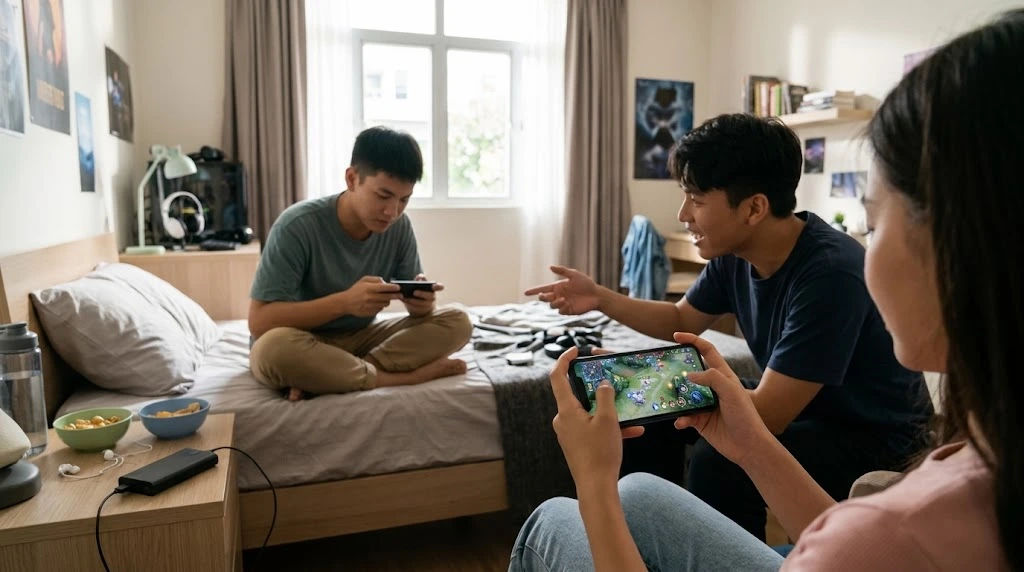
A smartphone's display does more than show pictures and animations. It continuously updates the image to make movement appear smooth and responsive. This is particularly important in Mobile App Gaming, where quick reactions, moving objects, and detailed animations can affect the overall experience. A higher refresh rate can make gameplay feel more fluid, but its benefits depend on the game, hardware, and display settings.
Whether someone enjoys racing games, action adventures, sports simulations, or competitive shooting games, understanding refresh rate can help improve their gaming experience. However, a higher number does not automatically mean better performance. Players should understand how refresh rates work, how they interact with frame rates, and whether upgrading to a faster display is worth the investment.
What Is Screen Refresh Rate?
Screen refresh rate refers to how many times a smartphone display updates its image every second. It is measured in hertz (Hz).
For example, a 60Hz display refreshes its image 60 times per second. A 90Hz display refreshes 90 times per second, while a 120Hz display can update the image 120 times per second.
The higher the refresh rate, the more frequently the display can show new visual information. This can make scrolling, animations, and gameplay appear smoother.
Most modern smartphones offer refresh rates of 60Hz, 90Hz, or 120Hz. Some premium gaming smartphones also support higher refresh rates, such as 144Hz or 165Hz.
However, the actual improvement depends on whether the smartphone can produce enough frames to take advantage of the display.
How Refresh Rate Works During Gameplay
When a player moves a character, turns a camera, or drives a virtual vehicle, the game generates a sequence of images called frames.
The display presents these frames to create the appearance of continuous movement.
A higher refresh rate gives the screen more opportunities to display updated frames. This can make movement appear more natural, especially during fast-paced activities.
For example, turning quickly in a shooting game may look smoother on a 120Hz display than on a 60Hz display, provided the game supports the higher frame rate.
How Does Refresh Rate Improve Mobile Gaming?
A higher refresh rate can improve several aspects of gaming. Although it does not directly increase processing power, it can make the visual experience more responsive.
1. Smoother Visual Movement
Mobile App Gamingp kr98 most noticeable benefits of a higher refresh rate is smoother movement.
In racing games, vehicles frequently change direction, accelerate, and move through detailed environments. A faster display can show these movements with greater visual fluidity.
Similarly, action games often contain quick character movements, camera rotations, and animated effects. A higher refresh rate can make these activities look more natural.
For players who enjoy fast-paced titles, this improvement can make gameplay more enjoyable.
2. Better Visual Responsiveness
Refresh rate can also influence how quickly visual updates appear on the screen.
When a player taps a control or moves a character, the smartphone processes that input and updates the displayed image.
A higher refresh rate can reduce the time between display updates. At 60Hz, a new refresh occurs approximately every 16.67 milliseconds. At 120Hz, that interval decreases to approximately 8.33 milliseconds.
This difference can contribute to a more responsive experience.
However, overall input delay also depends on touch sampling rate, processor performance, game programming, and other hardware factors.
3. Improved Fast-Paced Gameplay
Competitive games often involve quick decisions and precise movements.
Players may need to aim at moving opponents, avoid obstacles, or respond to unexpected changes.
A faster display can make moving objects easier to follow because the screen presents visual updates more frequently.
This can be particularly useful in shooting games, fighting games, and competitive racing titles.
Nevertheless, refresh rate alone cannot guarantee better performance. Player experience, reaction time, and game mechanics remain important.
Understanding Refresh Rate and Frame Rate
Refresh rate and frame rate are closely related, but they are not the same thing.
Refresh rate describes the display's ability to update the image. Frame rate describes how many individual frames the game produces every second.
Frame rate is commonly measured in frames per second (FPS).
For example, a smartphone may have a 120Hz display but run a particular game at only 60 FPS.
In that situation, the display supports 120 updates per second, but the game produces only 60 new frames each second.
Why Both Numbers Matter
For the smoothest experience, the game and display need to work together.
A 120Hz screen can provide its full visual benefit when the game produces a sufficiently high frame rate.
If the game is limited to 30 FPS, upgrading from a 60Hz display to a 120Hz display may provide little improvement in the actual gameplay animation.
The processor and graphics hardware must also be powerful enough to maintain consistent performance.
Common Refresh Rate and Frame Rate Combinations
The following examples explain how different combinations can affect the experience.
|
Display refresh rate |
Game frame rate |
General experience |
|---|---|---|
|
60Hz |
30 FPS |
Basic, less fluid movement |
|
60Hz |
60 FPS |
Smooth standard gameplay |
|
90Hz |
60 FPS |
Smooth, with some display capacity unused |
|
120Hz |
60 FPS |
Good gameplay, but not fully utilizing the display |
|
120Hz |
120 FPS |
Very fluid supported gameplay |
|
144Hz |
144 FPS |
Highly fluid gameplay when supported |
These examples assume the smartphone can maintain the stated frame rate and the game supports the relevant settings.
Which Mobile Games Benefit Most From Higher Refresh Rates?
Not every game needs a high refresh rate. Some genres benefit more than others because of their movement speed and gameplay requirements.
First-Person Shooting Games
Shooting games frequently involve rapid camera movements, aiming, and tracking opponents.
A higher refresh rate can make these movements appear smoother and help players follow targets more comfortably.
Competitive players may particularly appreciate the difference between 60Hz and 120Hz displays.
However, network latency and touch response are equally important when playing online.
Racing Games
Racing games involve continuous movement, quick turns, and changing environments.
A higher refresh rate can make vehicle movement and road details appear smoother.
This can create a more immersive experience, particularly when driving at high speeds or navigating difficult tracks.
Players may also find camera movements more comfortable because visual transitions appear less abrupt.
Sports Games
Football, cricket, basketball, and other sports games often involve fast-moving characters and objects.
A faster display can improve the appearance of running animations, ball movement, and camera transitions.
This can make sports simulations feel more realistic.
However, the improvement will depend on whether the game has been optimized for higher frame rates.
Strategy and Puzzle Games
Strategy and puzzle games generally involve slower movement and fewer demanding animations.
A 60Hz display is usually sufficient for these activities.
Although a higher refresh rate may make menus and transitions smoother, it may not significantly change the actual gaming experience.
Does a 120Hz Display Make Gaming Better Than 60Hz?
For many players, moving from 60Hz to 120Hz can create a noticeable improvement.
A 120Hz screen refreshes twice as frequently as a 60Hz display. This provides more opportunities to show updated visual information.
The difference is particularly noticeable when moving the camera, controlling characters, or following fast-moving objects.
Benefits of 60Hz Displays
A 60Hz display remains suitable for everyday gaming.
Its advantages include:
-
Lower display power requirements in many situations.
-
Compatibility with a wide range of games.
-
Affordable smartphone options.
-
Sufficient smoothness for casual gaming.
-
Less demanding display performance requirements.
Players who mainly enjoy casual titles may not need anything faster.
Benefits of 120Hz Displays
A 120Hz display offers several advantages:
-
Smoother supported animations.
-
More fluid camera movements.
-
Improved visual responsiveness.
-
Better motion presentation in compatible games.
-
A more comfortable experience for some competitive players.
However, these benefits are most noticeable when the game actually supports higher frame rates.
The Role of Smartphone Hardware
A high-refresh-rate display cannot deliver its full potential without suitable smartphone hardware.
Several internal components work together to produce smooth gameplay.
Processor Performance
The processor handles important gaming calculations, including game logic, character movement, and other operations.
A powerful processor can help maintain consistent performance in demanding games.
If the processor struggles to process game information, the frame rate may drop even when the display supports 120Hz.
Graphics Processing Unit
The graphics processing unit, or GPU, handles visual rendering.
It creates images, animations, lighting effects, and other graphical elements.
A capable GPU helps produce more frames per second, allowing a high-refresh-rate display to show smoother movement.
RAM Capacity
Random access memory helps smartphones manage active applications and game data.
Insufficient memory can contribute to performance problems, particularly when several applications are running simultaneously.
Adequate RAM can support smoother multitasking and reduce interruptions during gaming.
Cooling System
Gaming performance can also decline when a smartphone becomes excessively hot.
Some devices reduce processor and GPU performance to control temperatures. This process is known as thermal throttling.
A good cooling system helps maintain more consistent performance during longer gaming sessions.
Does a Higher Refresh Rate Consume More Battery?
Yes, using a higher refresh rate can increase battery consumption.
A display operating at 120Hz generally needs to update more frequently than one operating at 60Hz. Depending on the display technology and implementation, this can require additional power.
The exact difference varies between smartphones.
Other factors, including brightness, processor activity, network connectivity, and game graphics, also influence battery consumption.
How to Manage Battery Consumption
Players can use several practical methods to balance performance and battery life.
Use automatic refresh rate settings: Many smartphones automatically adjust their refresh rate according to the activity being performed.
Choose 60Hz for casual games: Slower games usually do not require a high refresh rate.
Reduce screen brightness: Lower brightness can help conserve battery power.
Close unnecessary applications: Background applications may consume processing resources and battery power.
Avoid excessive heat: Playing in a cool environment can help maintain consistent performance and protect battery health.
These adjustments allow players to enjoy smoother gameplay without unnecessarily reducing battery life.
How Touch Sampling Rate Affects Gaming
Refresh rate is not the only display specification that matters.
Touch sampling rate is another important feature, particularly for competitive players.
It measures how frequently the touchscreen checks for finger input. It is also measured in hertz.
For example, a smartphone with a 240Hz touch sampling rate checks for touch input more frequently than a device with a 120Hz touch sampling rate.
Refresh Rate Versus Touch Sampling Rate
Although these specifications are related, they perform different functions.
-
Refresh rate determines how frequently the display updates.
-
Touch sampling rate determines how frequently the touchscreen detects input.
A smartphone can have a 120Hz display and a 240Hz touch sampling rate.
This combination can provide smooth visuals and responsive touch controls.
For games that require accurate aiming, fast tapping, or precise movements, both specifications can contribute to a better experience.
However, the software and overall touch-processing system also affect real-world responsiveness.
Can Every Mobile Game Support 120Hz?
No. Not every game supports high-refresh-rate gameplay.
Some games are designed to operate at 30 FPS or 60 FPS. Others offer additional performance options that allow compatible devices to reach 90 FPS or 120 FPS.
Game developers often introduce these limitations to maintain stability and compatibility across different devices.
How to Check Game Compatibility
Players can check whether a game supports higher frame rates by following a few simple steps.
-
Open the game on the smartphone.
-
Navigate to its graphics or performance settings.
-
Look for frame-rate options.
-
Check whether 90 FPS or 120 FPS is available.
-
Select the highest stable option supported by the device.
Some smartphones also provide gaming dashboards that display performance information and refresh rate settings.
Players should avoid forcing unsupported settings because this can cause instability, overheating, or unexpected performance problems.
How to Choose a Smartphone for Gaming
Choosing a gaming smartphone requires more than checking its refresh rate.
A balanced device should provide suitable processing power, good battery capacity, effective cooling, and a responsive display.
Consider Your Gaming Habits
Casual players who mainly enjoy puzzles, card games, and simple adventures may find a 60Hz display completely adequate.
Players who frequently enjoy racing, shooting, and competitive multiplayer titles may benefit from a 90Hz or 120Hz display.
Understanding personal gaming habits can prevent unnecessary spending.
Check Processor and GPU Performance
Look for a smartphone with a processor and GPU capable of handling the games you regularly play.
A high-refresh-rate display will not provide much benefit if the hardware cannot produce enough frames.
Evaluate Battery Capacity
Long gaming sessions require sufficient battery capacity.
A smartphone with a larger battery can provide additional playing time, although actual battery life depends on software, display technology, and hardware efficiency.
Look for Effective Cooling
Good thermal management helps smartphones maintain stable performance.
Devices with effective cooling systems are particularly useful for people who frequently play demanding games.
Consider Display Quality
Refresh rate is only one aspect of display quality.
Resolution, brightness, color accuracy, contrast, and panel technology also influence the overall visual experience.
A balanced display can make games look attractive while providing smooth movement.
Common Myths About High Refresh Rate Gaming
Several misconceptions surround high-refresh-rate smartphone displays.
Understanding these myths helps players make informed decisions.
A 120Hz Display Automatically Provides 120 FPS
This is incorrect.
A display can support 120Hz without the game producing 120 FPS.
The processor, GPU, game settings, and software limitations determine the actual frame rate.
Higher Refresh Rate Always Means Better Gaming
Not necessarily.
Some games do not benefit significantly from higher refresh rates.
A casual puzzle game may look almost identical at 60Hz and 120Hz during normal gameplay.
Refresh Rate Improves Internet Speed
Refresh rate has no direct effect on internet speed.
Online gaming performance depends on network quality, latency, connection stability, and server performance.
A higher refresh rate cannot eliminate network lag.
Every Premium Smartphone Is a Gaming Phone
A premium smartphone may offer a beautiful display and powerful processor, but that does not automatically make it ideal for extended gaming sessions.
Cooling, battery performance, touch response, and software optimization are also important.
Practical Tips for Getting the Best Gaming Experience
Players can improve their gaming experience by combining suitable display settings with good device management.
Consider the following recommendations:
-
Enable a higher refresh rate when playing compatible games.
-
Use balanced graphics settings to maintain stable FPS.
-
Keep smartphone software and games updated.
-
Avoid playing while the device is excessively hot.
-
Use a reliable internet connection for multiplayer games.
-
Close unnecessary background applications.
-
Monitor battery consumption during longer sessions.
-
Adjust brightness according to the playing environment.
-
Choose performance settings that provide consistent gameplay rather than unstable maximum FPS.
These simple habits can help smartphones deliver more reliable gaming performance.
Is a Higher Refresh Rate Worth Paying For?
Whether a higher refresh rate is worth the additional cost depends on individual requirements.
For competitive players, a 120Hz display can be a valuable feature. Smoother movement and more frequent visual updates may improve comfort and make fast-paced games more enjoyable.
For casual players, a good 60Hz display combined with a capable processor may provide excellent value.
A 90Hz display can also be a practical middle ground for people who want smoother visuals without purchasing an expensive gaming smartphone.
It is important to compare the complete smartphone specification rather than focusing on one number.
A balanced device with good processing power, effective cooling, reliable battery life, and a quality display is often a better investment than a phone with an impressive refresh rate but weaker hardware.
Conclusion
Screen refresh rate plays an important role in improving the visual experience of smartphone gaming. A higher refresh rate can make character movements, camera transitions, and fast-paced animations appear smoother. For players who enjoy competitive shooting games, racing simulations, and sports titles, this improvement can make gameplay more enjoyable and responsive.
However, refresh rate is only one part of overall gaming performance. A 120Hz display cannot automatically deliver 120 FPS if the processor, GPU, or game software cannot support it. Players should understand the relationship between refresh rate and frame rate before deciding whether a smartphone upgrade is necessary.
Battery consumption is another important consideration. Running a display at a higher refresh rate can use additional power, especially during demanding gaming sessions. Automatic display settings, suitable graphics options, and effective temperature management can help balance performance and battery life.
Touch sampling rate also deserves attention because it influences how frequently a touchscreen detects player input. Combining responsive touch controls with a high-refresh-rate display can provide a more satisfying experience, particularly in games that require precision and quick reactions.
Ultimately, the best smartphone depends on individual gaming preferences. Casual players may find 60Hz sufficient, while enthusiasts and competitive players may appreciate the advantages of 90Hz or 120Hz displays. The goal should be to choose a device that balances display quality, processing power, cooling, battery capacity, and affordability.
By understanding these features, players can make smarter purchasing decisions and enjoy smoother, more consistent Mobile App Gaming without spending money on specifications they may never use.