
The beauty industry has become one of the fastest-growing career fields, offering opportunities for people who enjoy creativity, personal care, fashion, and working with others. Many individuals are interested in becoming professional makeup artists, hairstylists, skincare specialists, beauticians, or salon professionals. However, starting a career in this industry requires more than personal interest. It requires practical skills, proper training, confidence, and an understanding of professional beauty services. 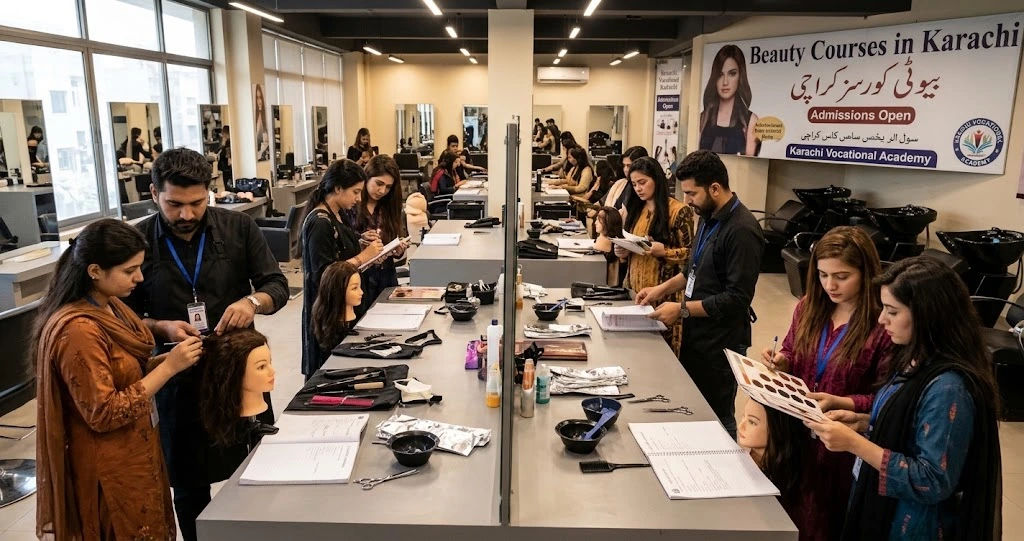 This is where beauty courses in Karachi can make a meaningful difference by helping beginners develop the knowledge and experience needed to enter the beauty industry.
Karachi offers various opportunities for people who want to learn professional beauty skills. From makeup application and hairstyling to skincare treatments and salon management, students can explore different areas according to their interests. Professional training can help individuals understand industry standards, improve their techniques, and prepare for real working environments.
For beginners, enrolling in a suitable course can be the first step toward building a successful career. Whether someone wants to work in a salon, provide freelance services, open a beauty studio, or eventually become a beauty trainer, the right education can provide a strong foundation.
Career Opportunities in the Beauty Industry
The beauty industry includes several professional fields. Each field requires different skills, techniques, and levels of experience. Understanding these opportunities can help students select a suitable career direction.
Professional Makeup Artist
Becoming a professional makeup artist is a popular career choice for people interested in cosmetics and creativity. Makeup artists work with clients for weddings, parties, photoshoots, fashion events, and other special occasions.
Professional training teaches students how to select suitable products, prepare different skin types, understand facial features, and create different makeup looks.
Students also learn about foundation matching, contouring, highlighting, eye makeup, and lipstick application.
With experience, makeup artists can develop their own style, build a portfolio, and attract regular clients.
Professional Beautician
A beautician provides different personal care and beauty services. These services may include facials, waxing, threading, basic skincare, manicures, pedicures, and other salon treatments.
This career is suitable for individuals who enjoy helping people maintain their appearance and feel confident.
Training helps students understand hygiene, customer care, product selection, and the correct use of beauty equipment.
Hair Stylist
Hair styling is another career option with opportunities in salons, fashion events, weddings, and freelance services.
Professional hairstylists learn haircutting, blow-drying, hair setting, straightening, curling, and basic hair treatments.
Some advanced programs also introduce hair coloring and chemical treatments.
With proper practice, students can develop the technical skills needed to work with different hair textures and styles.
Skincare Specialist
Skincare professionals help clients understand their skin and choose appropriate beauty treatments.
Their work may involve cleansing, basic facials, exfoliation, and other non-medical skincare services.
Students must understand different skin types, product ingredients, hygiene standards, and safe treatment practices.
Medical skin conditions and procedures requiring clinical qualifications should remain under the supervision of appropriately licensed healthcare professionals.
How Professional Beauty Training Helps Beginners
Starting a beauty career without proper knowledge can be challenging. Beginners may understand basic makeup or skincare techniques but lack the confidence to provide services professionally.
Structured training helps bridge this gap.
Learning Essential Beauty Techniques
One of the biggest advantages of professional education is learning techniques in a structured way.
Students do not have to depend entirely on online videos or personal experimentation. Instead, instructors explain each process and demonstrate the correct methods.
For example, a makeup student may learn how to prepare the skin before applying foundation. They can also understand how to blend products, select appropriate shades, and create balanced makeup looks.
These skills help beginners avoid common mistakes.
Building Confidence Through Practice
Confidence is important when working with clients.
A person may understand a technique theoretically but struggle when applying it to another person's face or hair.
Practical sessions allow students to repeat different techniques until they become more comfortable.
They can also receive feedback from instructors and learn how to correct mistakes.
This experience makes it easier to handle professional responsibilities after completing the course.
Professional Hygiene
Beauty professionals work directly with clients, so cleanliness and safety are essential.
Training introduces students to proper hygiene practices, including cleaning tools, sanitizing equipment, maintaining clean workstations, and using disposable products when appropriate.
Students also learn why products should not be shared carelessly and why certain treatments require additional precautions.
Understanding these practices helps protect both clients and professionals.
What Skills Can Students Learn During Beauty Courses?
The skills covered in a training program depend on its duration, level, and specialization.
However, many professional programs introduce students to several important areas.
Makeup Application and Product Knowledge
Students learn how to work with different cosmetic products and understand their purposes.
Important topics may include:
-
Foundation and concealer application.
-
Face shaping and contouring.
-
Eye makeup techniques.
-
Bridal and party makeup.
-
Color coordination.
-
Makeup removal and skin preparation.
-
Cosmetic tools and brushes.
Product knowledge is particularly important because clients have different skin types, preferences, and budgets.
Haircare and Hairstyling
Hair-related training may include washing techniques, blow-drying, curling, straightening, and creating different hairstyles.
Students may also learn how to identify common hair concerns and recommend suitable cosmetic haircare products.
Advanced programs can introduce coloring, cutting, and chemical treatments.
Facial and Basic Skincare Treatments
Skincare education can help students understand how to perform basic salon treatments safely.
They may learn about cleansing, exfoliation, facial massage, masks, and moisturization.
Understanding skin types is important because products and treatments should be selected according to individual needs.
Communication and Customer Service
Technical ability is not the only requirement for a successful beauty career.
Professionals must communicate clearly, understand client expectations, and provide a comfortable experience.
Training may introduce students to consultation techniques, appointment management, professional behavior, and customer satisfaction.
These skills help create positive relationships with clients.
Choosing the Right Beauty Training Institute in Karachi
Selecting an appropriate institute is an important decision. The quality of education can influence how prepared students feel when entering the professional market.
Before enrolling, beginners should consider several factors.
Check the Course Curriculum
A good training program should have a clear curriculum.
Students should understand which subjects will be covered, how much practical training is included, and whether the course focuses on beginner or advanced techniques.
For example, someone interested in bridal makeup should look for a program that includes different makeup styles rather than only basic cosmetic application.
Similarly, someone interested in skincare should choose a program that covers facial treatments, hygiene, and product knowledge.
Consider Instructor Experience
Experienced instructors can provide valuable guidance.
They may share practical knowledge about working with clients, handling different beauty concerns, and managing professional challenges.
Before choosing an institute, students should ask about instructors' qualifications and professional experience.
It is also helpful to understand whether students receive individual feedback during practical sessions.
Look for Practical Training Facilities
A training environment should provide appropriate equipment and materials.
Students should have opportunities to practice using professional brushes, makeup products, skincare tools, and hairstyling equipment.
Observing demonstrations is useful, but performing the techniques independently is even more important.
Understand Certification Details
Some institutes provide certificates after students complete their training.
However, the value of a certificate depends on the institution, course content, assessment methods, and recognition.
Students should ask whether the certificate is issued by the institute itself or through an officially recognized awarding organization.
They should also check whether practical examinations or final assessments are required.
A certificate can support a professional profile, but it does not automatically guarantee employment.
Can Beauty Courses in Karachi Help You Find Employment?
beauty courses in Karachi training can improve employment opportunities by giving students practical skills and a better understanding of workplace expectations.
However, finding a job also depends on experience, performance, communication, and available opportunities.
Working in Beauty Salons
Salons regularly require trained professionals who can provide makeup, hair, skincare, and general beauty services.
After completing suitable training, beginners may apply for entry-level positions.
Some salons may initially offer assistant roles where new professionals can observe experienced workers and improve their techniques.
This experience can help students develop confidence and understand how professional salons operate.
Working in Makeup Studios
Makeup studios provide opportunities for individuals interested in professional cosmetics.
Students who specialize in makeup may work with experienced artists, assist during appointments, or gradually accept independent clients.
A strong portfolio can make it easier to demonstrate their abilities to potential employers.
Employment in Spas and Beauty Centers
Some trained beauticians may find opportunities in spas and beauty centers.
These workplaces may offer services such as facials, relaxation treatments, and basic personal care.
Students should ensure that their training matches the services they intend to provide.
Certain advanced treatments may require additional qualifications.
Freelance Beauty Services
Freelancing is another attractive career option.
Professionals can provide makeup, hairstyling, and selected beauty services through personal bookings.
They may work from home, travel to clients, or collaborate with salons and event organizers.
Freelancing offers flexibility, but it also requires business skills, marketing, scheduling, and customer management.
Starting Your Own Beauty Business After Training
A professional course can also help individuals prepare for entrepreneurship.
Instead of looking for employment, some students prefer to establish their own beauty businesses.
However, starting a business requires planning beyond technical training.
Establishing a Home-Based Beauty Studio
A home-based beauty studio can be a practical starting point for beginners.
It may require less investment than renting a commercial salon.
Students can begin with a limited selection of services and gradually expand their offerings as their experience and customer base grow.
A clean workspace, suitable equipment, quality products, and professional behavior are essential.
Opening a Professional Salon
Opening a salon requires more preparation.
Business owners must consider location, rent, equipment, staff, product supplies, utilities, and operating expenses.
They should also understand relevant local business requirements.
Before investing a large amount of money, it is useful to gain experience working in an established salon.
This allows new professionals to understand customer expectations and daily business operations.
Offering Freelance Bridal Makeup
Bridal makeup can provide opportunities for skilled professionals, especially during wedding seasons.
However, clients usually expect high-quality results and reliable service.
A beginner should build experience with different looks before accepting complex bridal bookings independently.
A professional portfolio, clear pricing, and positive customer reviews can help establish credibility.
How to Build a Strong Beauty Career Portfolio
A portfolio is one of the most useful tools for showing professional abilities.
It allows potential clients and employers to see the quality and variety of a person's work.
Take Quality Photographs
Students should photograph their completed work in good lighting.
For makeup artists, photographs can show different styles, such as natural makeup, party makeup, and bridal looks.
Hairstylists can display different haircuts, curls, and formal hairstyles.
Photographs should represent actual work and should not be misleading.
Create a Professional Social Media Profile
Social media platforms can help beauty professionals reach potential clients.
Instagram, Facebook, and other platforms allow individuals to display their work, share beauty tips, and communicate with customers.
Posting regularly can help increase visibility.
However, professionals should focus on quality rather than simply uploading a large number of pictures.
Collect Client Feedback
Positive customer experiences can support professional growth.
After completing a service, professionals can request honest feedback from clients.
Reviews can help identify areas for improvement and build trust with future customers.
How Much Time Is Needed to Start a Beauty Career?
The time required depends on the selected specialization and the student's learning ability.
Some introductory courses may take a few weeks, while comprehensive programs can continue for several months.
Advanced training may require additional time and practical experience.
For example, learning basic makeup application may take less time than developing professional bridal makeup skills.
Similarly, becoming comfortable with advanced hairstyling requires repeated practice.
Students should not rush their education simply to receive a certificate quickly.
Developing reliable skills is more important than completing a course in the shortest possible time.
Common Challenges in Starting a Beauty Career
Although the beauty industry offers opportunities, beginners should understand that building a successful career takes effort.
Strong Competition
Many people enter the beauty industry every year.
New professionals may find it difficult to attract clients or secure employment immediately.
Developing specialized skills and providing reliable services can help individuals stand out.
Initial Financial Investment
Beauty professionals may need to purchase products, tools, equipment, and other supplies.
Freelancers and business owners may also need to spend money on advertising and transportation.
Planning a realistic budget can help avoid unnecessary financial pressure.
Keeping Up With Beauty Trends
Beauty trends change regularly.
New makeup techniques, hairstyles, products, and customer preferences continue to influence the industry.
Professionals should remain interested in learning and updating their skills.
Workshops, demonstrations, and advanced training can support long-term development.
Developing Customer Trust
Building a loyal customer base takes time.
Clients usually prefer professionals who understand their requirements, maintain hygiene, communicate clearly, and provide consistent results.
New professionals should focus on customer satisfaction rather than expecting immediate success.
Tips for Getting the Most Out of Your Beauty Course
Enrolling in a training program is only the beginning. Students must actively participate to gain maximum benefit.
Here are some practical suggestions:
-
Attend classes regularly: Consistent attendance helps students understand techniques and avoid missing important lessons.
-
Practice outside class: Repeating techniques improves accuracy and confidence.
-
Ask questions: Students should discuss anything they do not understand with their instructors.
-
Learn about products: Understanding different cosmetic and skincare products helps improve service quality.
-
Build a portfolio: Photographing completed work helps demonstrate progress.
-
Observe professionals: Watching experienced beauticians can provide useful insights into customer handling and workplace practices.
-
Continue learning: Advanced workshops and additional courses can help develop specialized skills.
Students who follow these suggestions can make better use of their training and prepare more effectively for professional responsibilities.
Is a Beauty Career Suitable for Everyone?
A beauty career can be rewarding, but it is important to understand the nature of the work before choosing this profession.
People who enjoy creativity, personal interaction, and practical activities may find this industry interesting.
However, beauty professionals must also be patient, responsible, organized, and willing to work with different types of customers.
Some services require standing for long periods, managing busy schedules, and working during evenings or weekends.
Individuals should consider their interests, financial expectations, and long-term goals before selecting a specialization.
A suitable course can help students discover their strengths and decide which professional direction they want to pursue.
Conclusion
Professional beauty education can provide a valuable starting point for individuals who want to build a career in the beauty industry. From makeup artistry and hairstyling to skincare and general beautician services, students can explore different professional opportunities according to their interests and abilities.
Enrolling in beauty courses in Karachi can help beginners develop essential technical skills, understand professional hygiene, improve customer communication, and gain practical experience. These qualities can make it easier to apply for salon positions, work in makeup studios, offer freelance services, or eventually establish an independent beauty business.
However, completing a course should not be considered the only requirement for success. Students must continue practicing, develop a professional portfolio, understand customer expectations, and stay updated with changing beauty trends. Choosing an institute with experienced instructors, a useful curriculum, and sufficient practical training is equally important.
Before enrolling, individuals should carefully compare course content, fees, duration, certification details, and available facilities. They should also select a specialization that matches their interests and career goals.
Ultimately, a successful beauty career is built through education, consistent practice, creativity, and dedication. With the right training and a willingness to improve, beginners can turn their interest in beauty into a professional skill and gradually develop meaningful career opportunities in this growing industry.